The CT (Current Transformer) coil is probably one of the most overlooked components in a hybrid inverter installation. It’s small, inexpensive and easy to install but if it’s installed incorrectly it can cause some very strange system behavior.
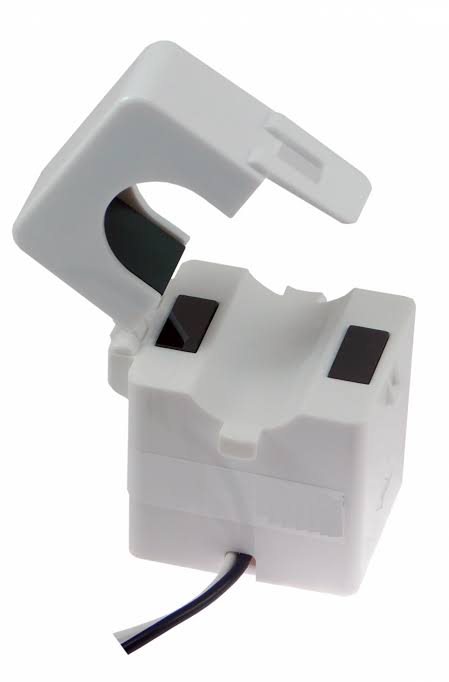
I’ve seen CT coils installed in the wrong location, fitted backwards, or simply left disconnected altogether. All three can lead to symptoms that are often mistaken for inverter faults. The CT coil measures the current flowing between your installation and the utility grid.
The inverter uses this information to determine whether it’s importing or exporting power and adjusts its output accordingly. Without an accurate CT measurement, the inverter is effectively making decisions using incorrect information.
The CT should be installed on the incoming utility supply before the installation splits into the essential and non-essential loads, as shown below.
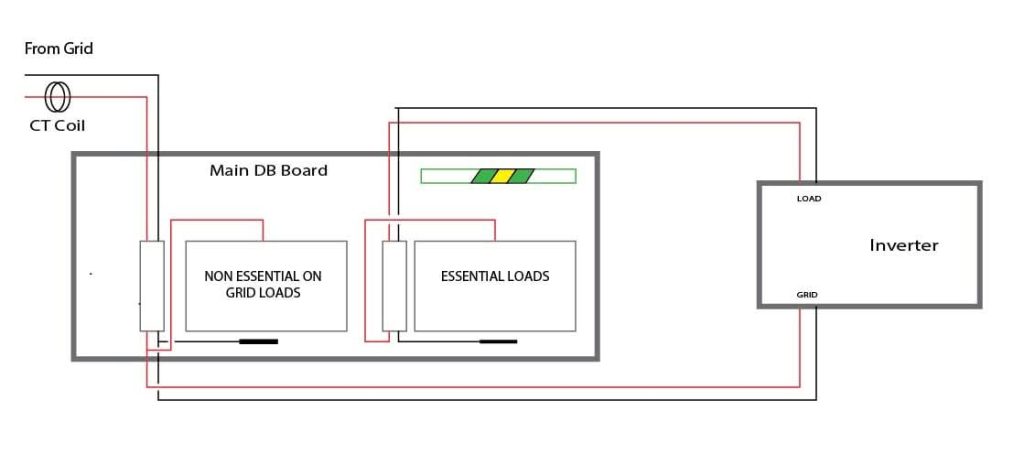
This allows the inverter to measure the total power flowing into and out of the property, including loads that aren’t connected to the backup output. This is especially important if you’re using export limitation or want the inverter to supplement grid connected loads.
Most CT coils have an arrow showing the direction they should face. If the CT is installed backwards, the inverter interprets the power flow in reverse, often leading to incorrect measurements and unpredictable operation.
Always check the manufacturer’s installation manual for the correct orientation.
Depending on the inverter and system configuration, I’ve personally seen the following symptoms caused by CT installation issues:
- Negative load readings.
- House load displayed as grid consumption.
- Load not being measured at all.
- Incorrect power flow diagrams.
- Zero-export not working correctly.
- Unnecessary importing or exporting of power.
- Inverter output constantly hunting up and down.
These symptoms don’t automatically mean the CT is the problem, but it’s one of the first things I check whenever a system isn’t behaving as expected. The CT coil is one of the smallest parts of a hybrid installation, but it’s responsible for one of the most important measurements the inverter makes.
Before assuming there’s an inverter fault, take a minute to confirm that the CT is installed in the correct location, facing the correct direction and properly connected. It might save you hours of unnecessary fault finding.