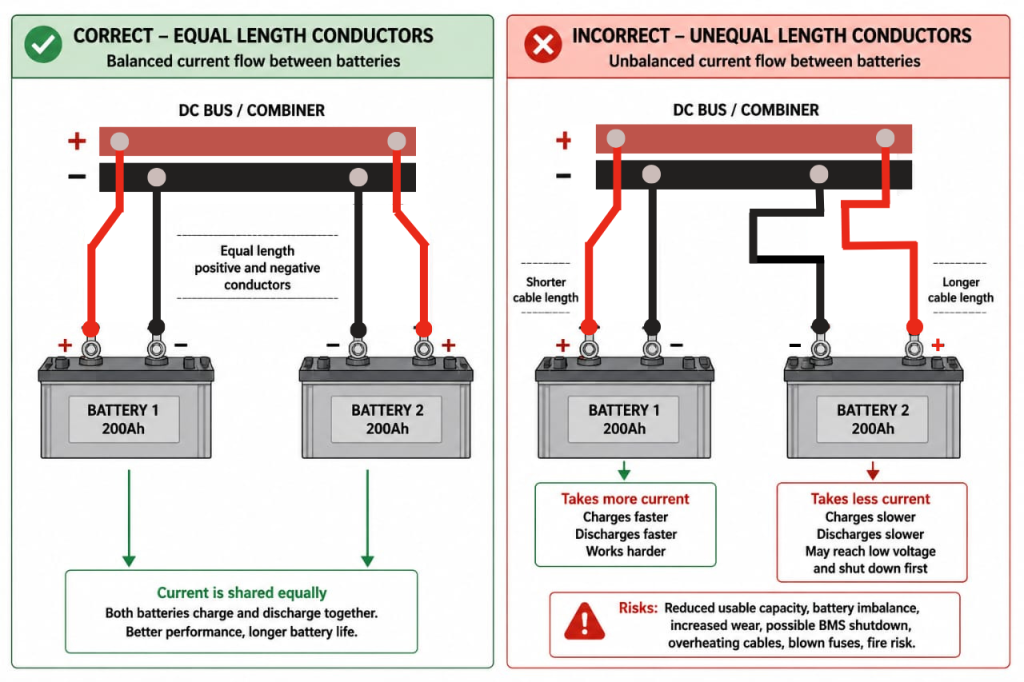
This was a site I was called out to where the client had two 200Ah batteries connected in parallel. The complaint was that the system would regularly shut down, with one of the batteries reaching its BMS low-voltage cutoff while the other battery still appeared to have plenty of capacity remaining.
The first step was simply getting the system running again. I temporarily reduced the inverter’s low-voltage shutdown setting to 40V, allowing the battery that had gone into BMS protection to wake up so both batteries could begin charging again.
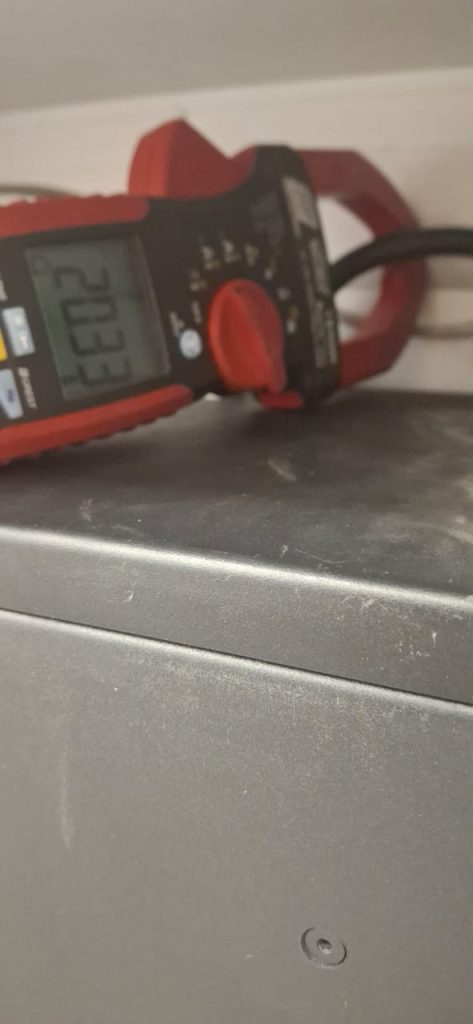
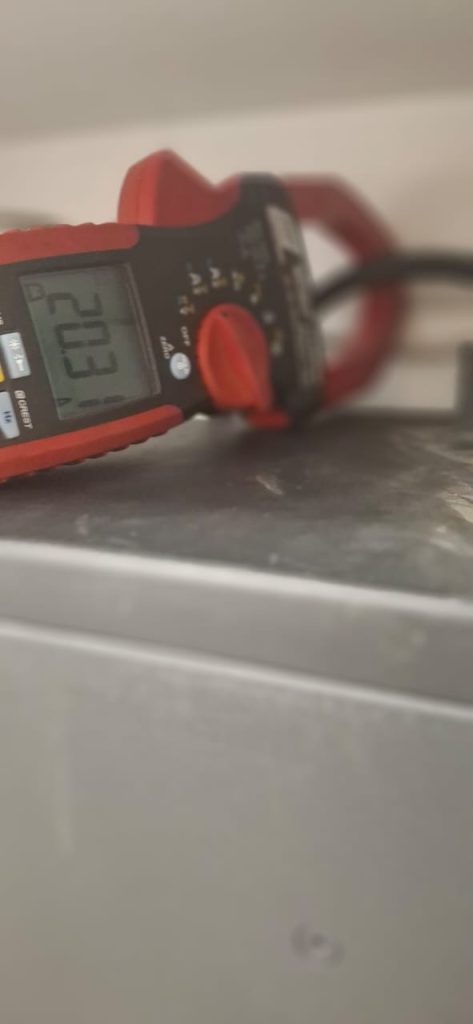
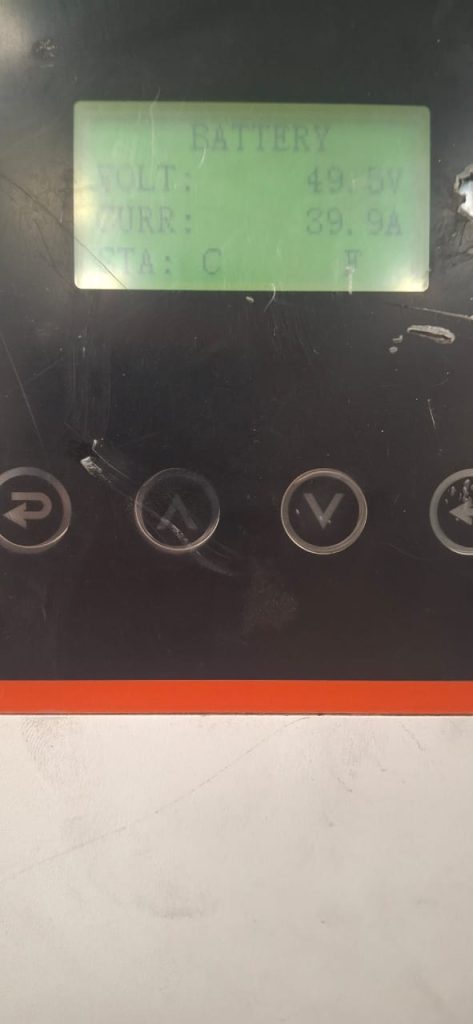
With the system recovered, I wanted to see whether both batteries were actually sharing the load equally. Using a DC clamp meter, I measured the current flowing into each battery individually.
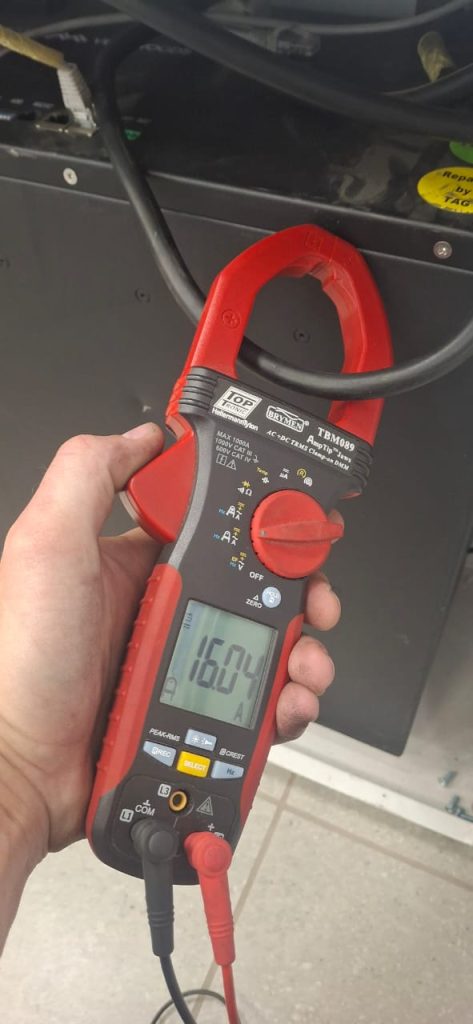
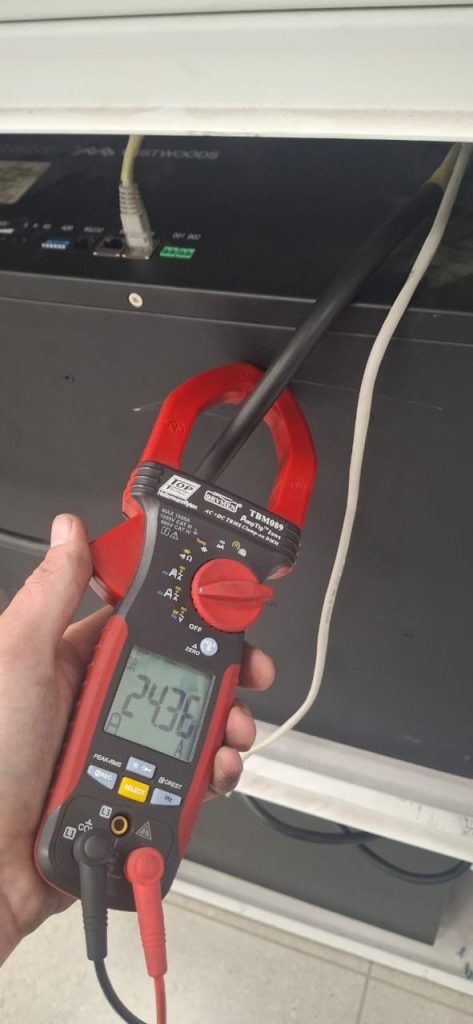
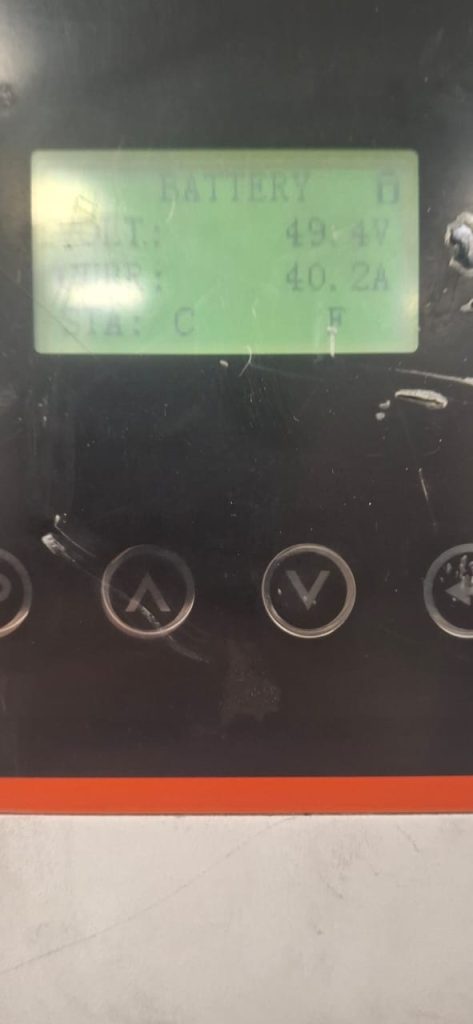
The difference was immediately obvious.
One battery was taking significantly more charging current than the other. The exact opposite happened during discharge, with that same battery supplying far more current to the inverter.
The result was predictable. One battery was reaching full charge much sooner, while the other was never fully charging. During discharge, one battery would reach its BMS cutoff voltage first and disconnect itself, even though the second battery still had usable capacity available.
The next step was to find out why.
Removing the cable trunking quickly revealed the problem. The second battery had DC conductors that were almost twice the length of those on the first battery. Although both batteries were connected in parallel, they didn’t have the same cable resistance, so the current naturally favoured the battery with the shorter cable run.
After shortening the longer conductors so both batteries had approximately equal cable lengths, the charging and discharging currents became much more balanced.
This is something that’s often overlooked during an installation, but it can have a significant impact on how a battery bank performs.
Unequal conductor lengths increase the resistance in one battery path, causing one battery to do more of the work while the other contributes less. Over time, this can lead to reduced usable capacity, unnecessary BMS shutdowns, increased battery wear, and poor overall system performance.
In more severe cases, forcing significantly higher currents through one set of conductors can overload cables, fuses or terminals, creating an unnecessary safety risk.
Whenever batteries are connected in parallel, the positive and negative conductor lengths from each battery to the common DC bus should be kept as equal as practically possible. Doing so ensures the batteries share both charge and discharge current evenly, allowing the system to perform as it was designed to.