A PV isolation (or insulation resistance) fault is probably one of the more frustrating faults to deal with on a PV system.
Diagnosing the type of fault is usually easy enough, as most inverters perform an insulation resistance check during startup and will report it as a fault. Finding where the fault actually is, however, is often a different story.
In this case, the site had a Solis 80K-5G inverter reporting a PV ISO-PRO1 fault, which completely stopped PV production.
Because this was a grid-tied only system, there was no interruption to the client’s loads. The site simply stopped generating solar power, and the fault was picked up by our operations centre during their routine monitoring.
Although this particular site uses a Solis inverter, the troubleshooting process below can be applied to most inverter brands that perform PV insulation monitoring.
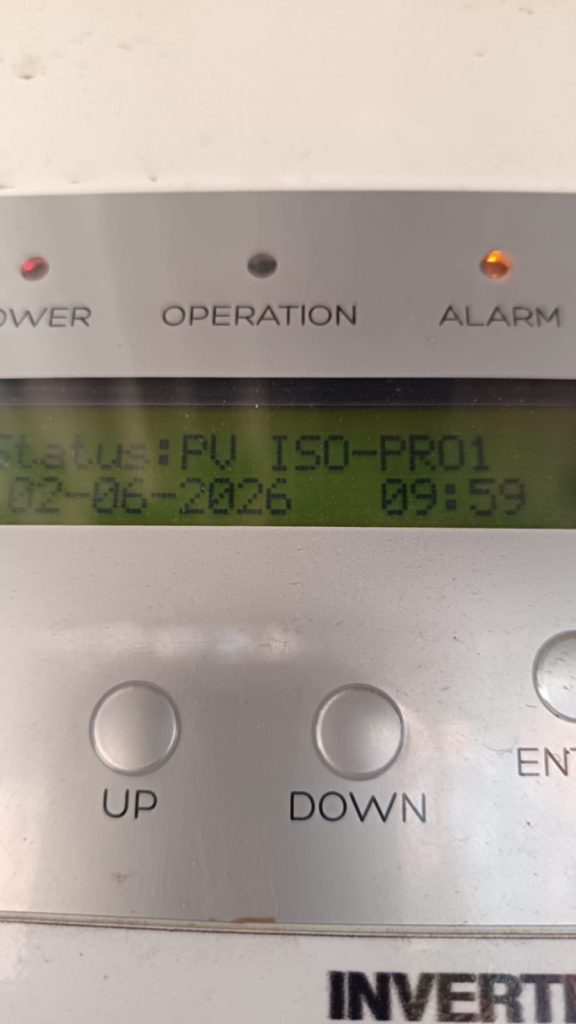
This fault happened to come in while I was already working at another site nearby, so I decided to stop in and have a look before heading back. The only problem was that I had none of my normal test equipment with me.
That meant the first objective wasn’t necessarily to find the exact cause of the fault, but rather to identify which PV string was responsible so it could be isolated and allow the rest of the plant to continue generating.
Sometimes restoring production is the priority, and the detailed fault finding can come afterwards.
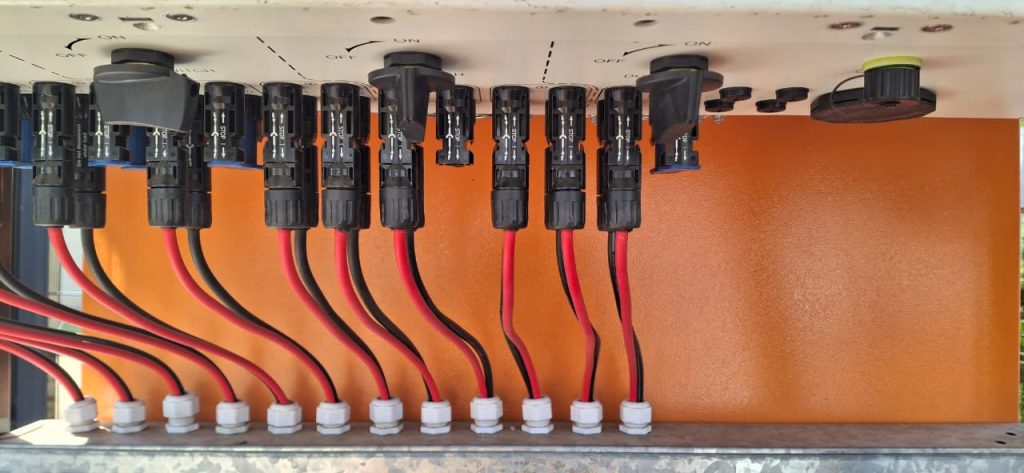
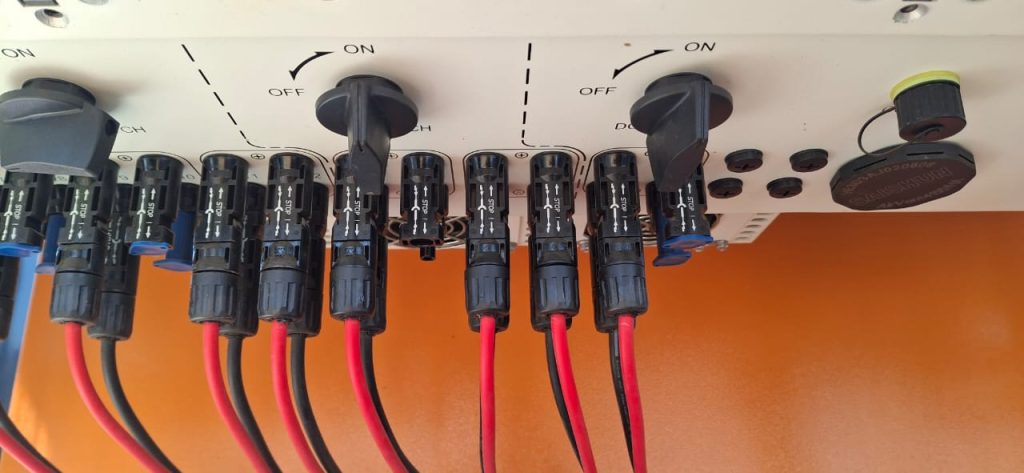
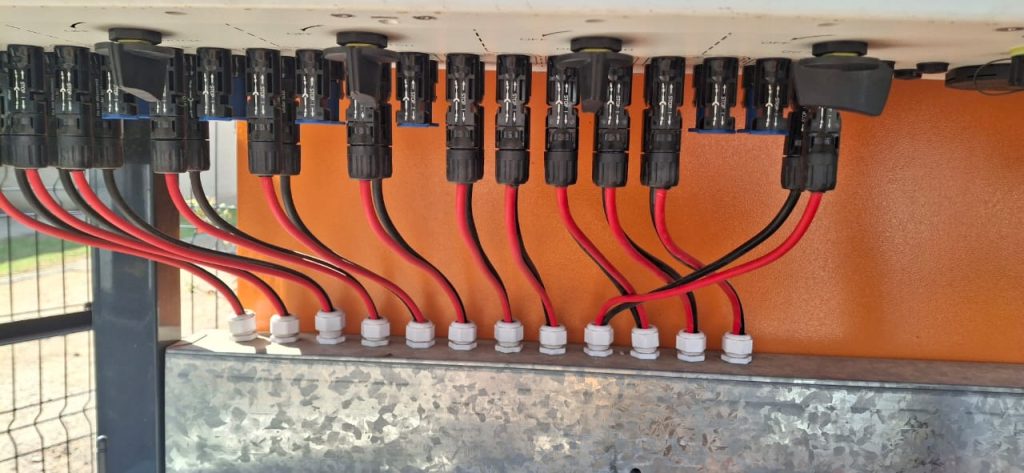
The Solis 80K-5G has five independent MPPTs, each protected by its own PV isolator. After performing a complete reboot of the inverter (PV OFF → Grid OFF → Grid ON → PV ON), The fault disappeared.
Even the previously faulty string started producing power again. That obviously made troubleshooting a little more difficult, because you can’t diagnose a fault that isn’t there.
After a bit of testing, I found that the inverter only performs its insulation resistance test when grid power is restored while PV voltage is already present. Knowing exactly when the inverter performs this test meant I could now recreate the fault consistently instead of waiting for it to happen randomly.
With the fault now repeatable, I started isolating each MPPT one at a time. Each PV isolator was switched off, and then each MPPT was individually brought back online while restoring grid power. Eventually one MPPT consistently caused the inverter to report the PV isolation fault.
The faulty string was then moved onto its own dedicated MPPT, with that isolator left switched off. This allowed the remainder of the array to continue operating while keeping the suspected faulty circuit safely isolated.
Fortunately, this site made the next step fairly straightforward.
There were two separate PV isolation DBs, One located at the inverter and another located much closer to the PV arrays. By disconnecting the cable run at the PV-side isolation DB, I was able to test the panels independently from the underground cable. Surprisingly, there was no measurable leakage from either the positive or negative conductors to earth on the panel side.
That effectively ruled out the PV modules and string wiring themselves. The fault had to be somewhere between the two DBs.
Once proper test equipment arrived on site, an insulation resistance test was carried out on the underground cable. The results immediately confirmed the suspicion. The negative conductor had effectively developed a dead short to earth.
At that point, the fault location was confirmed and the repair became straightforward. A replacement cable was installed between the two isolation points, after which the inverter completed its insulation test successfully and the system returned to full production.